
You know that well-known saying about God opening a window when a door gets closed, or in some cases, not so much closed as slammed in one’s face? Closed doors and roadblocks are a daily experience here in India when trying to do literally anything, from grocery shopping to setting up a cell phone, let alone a service project without the help of an established group or NGO. In the last week several doors were slammed. I found out that Etsy closed the shop we spent hours creating (they won’t even let me access the photos or text we wrote) to get the word out about the women’s empowerment program called anu LIFE because I set it up myself, and was managing it on the artisan’s behalf. How else was it supposed to get up and running when the ladies of anu have only the most basic of education; most of them didn’t even have the chance to complete high school? They haven’t yet been taught how to use a computer, let alone set up an e-commerce site (something that it’d be great to do a training on). Additionally, today I found out that the wrong bag was sent by the artisans to our very first US client. A red one was sent instead of a turquoise and red one. And 2 out of 4 volunteers who we recruited to help with this project have dropped out (we need 7). Deep breaths. Trying to think of both of these incidents as teaching/training opportunities, but it’s frustrating and even demoralizing.
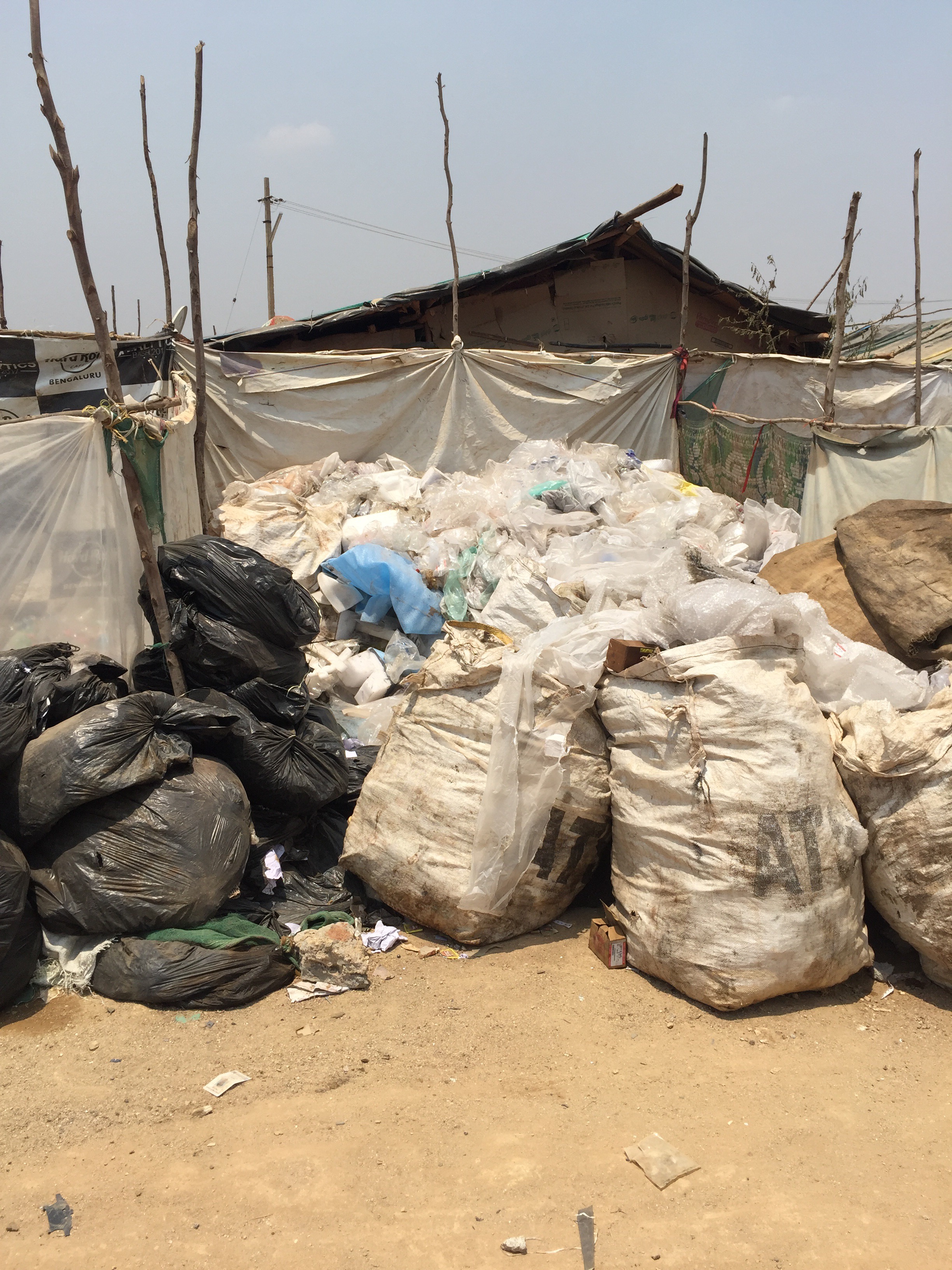
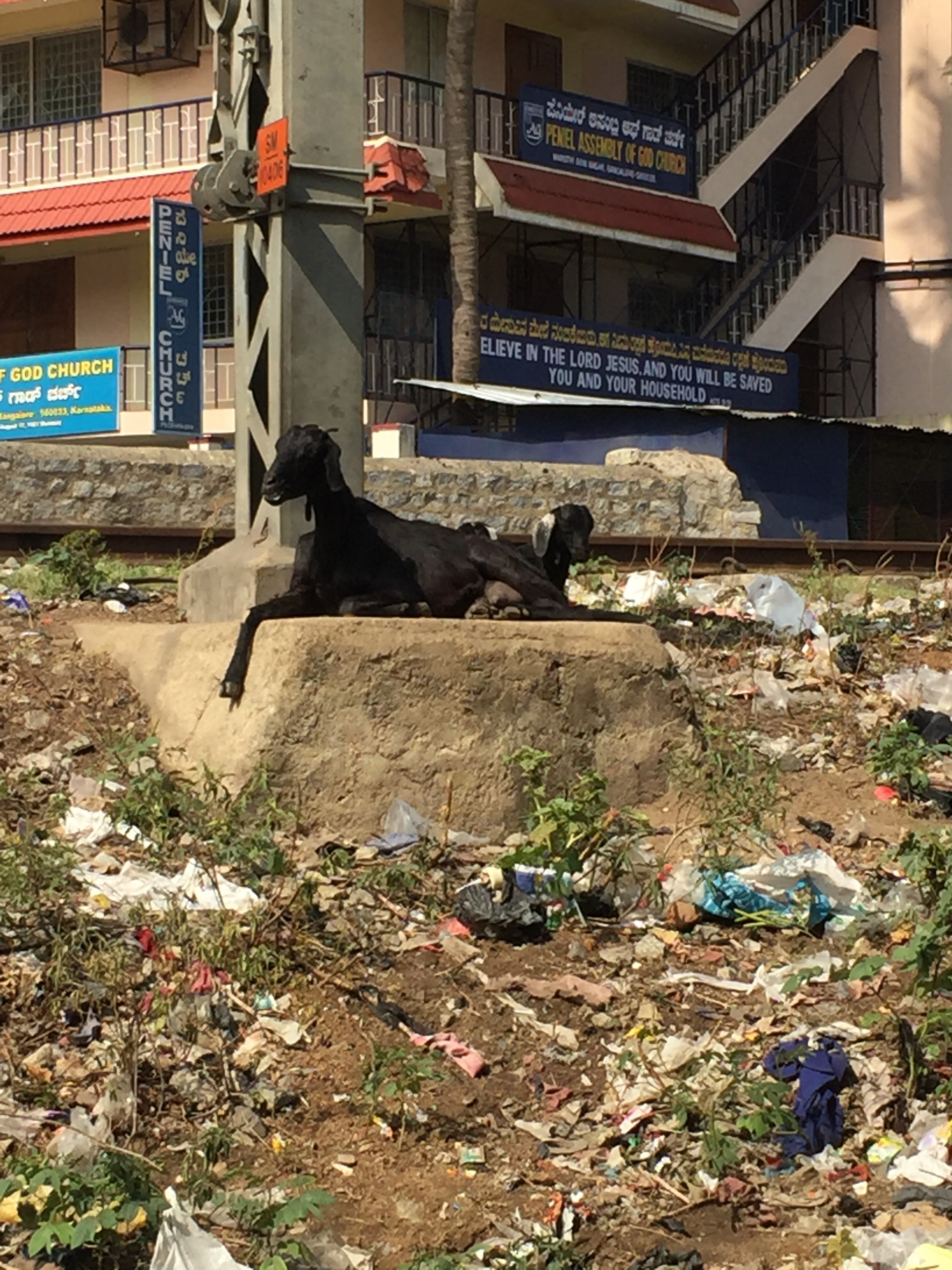
Obviously, everyone who sees the way much of the population lives in India wants to help out. Cleaning up the trash seems like a great idea, until you realize that throwing trash on the ground in your own hood is totally culturally acceptable, and even if you yourself clean it all up, tomorrow the trash will be back right where it was. And possibly, BBMP, the government of India trash department, will fine you since trash can only be picked up in certain areas by people they have given permission to. (WTF???) Trying to revitalize an ‘anganwadi’ or preschool, which the Indian government by its own admission, isn’t able to adequately help and is underserved by NGO’s, is so necessary–research has shown the importance of early childhood education on the kids themselves and society at large. However, although we haven’t been told outright that this is the case (having dated this century I understand the brush off when I get it), we seem to have been denied access by the same government official we contacted to ask permission from because 1) he probably has zero use for us as women, and 2) may have realized that some of us are white, and therefore must have lots of money and somehow there’s an opportunity for a bribe in there somewhere, or 3) he is afraid that we might find out about possible corruption in the school. Regardless, all of that work benchmarking with other NGO’s in the educational space; recruiting a team of volunteers; developing a name and tagline for the project; designing a curriculum; fundraising and developing fundraising opportunities; visiting other successful projects in impoverished communities; collecting donations of clothing, toys and soap; and on and on, has seemingly been done in vain.
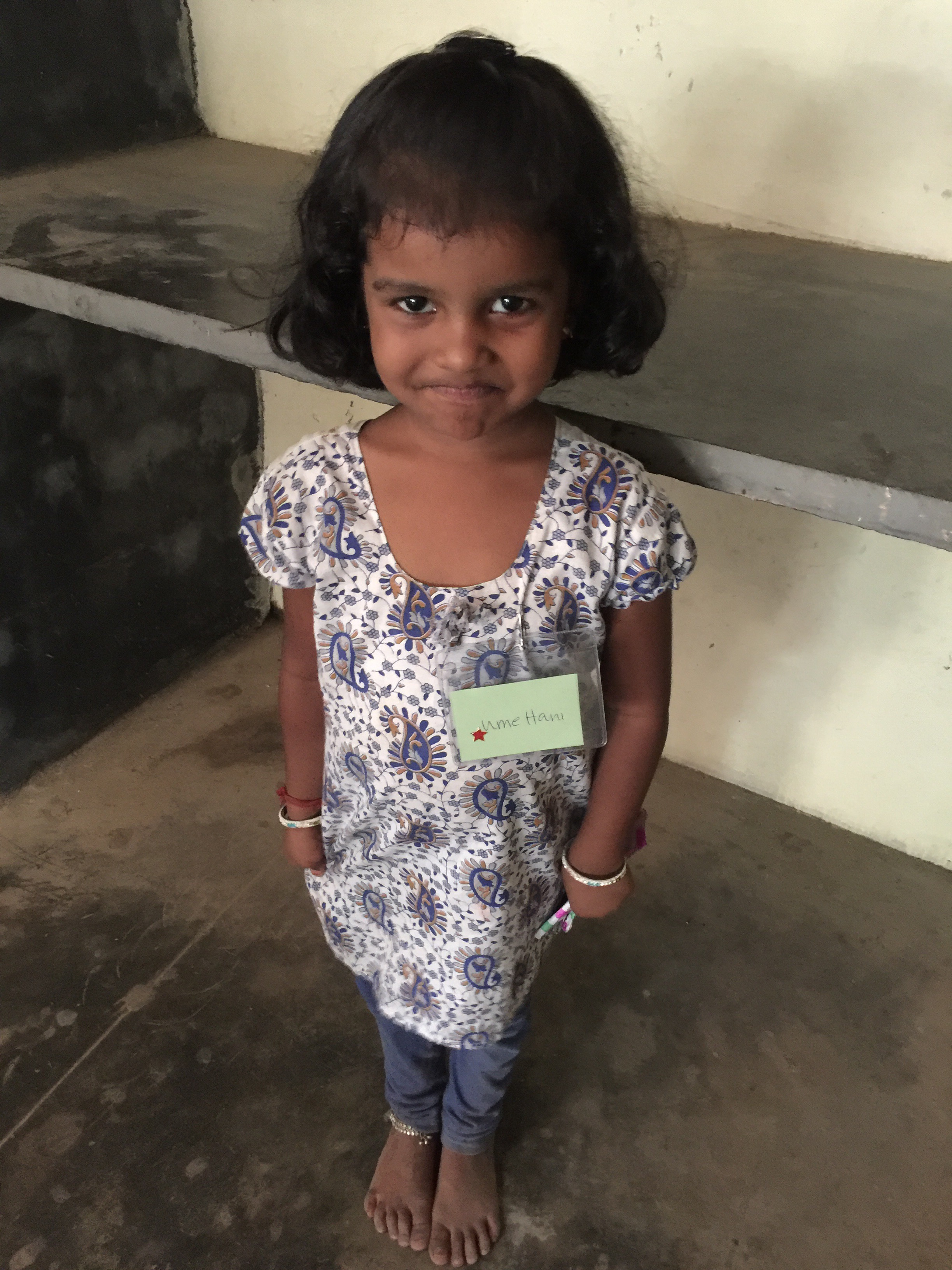

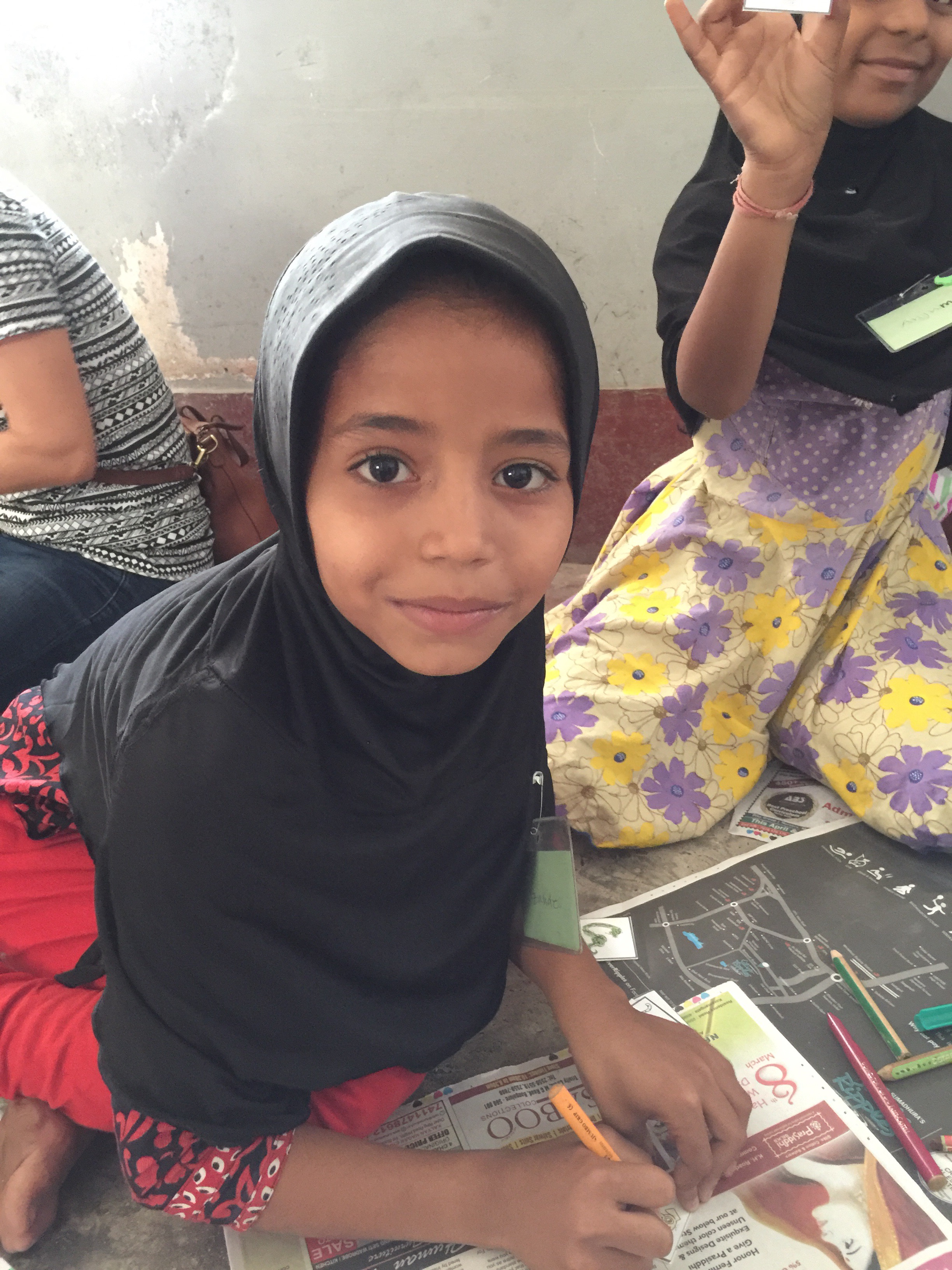
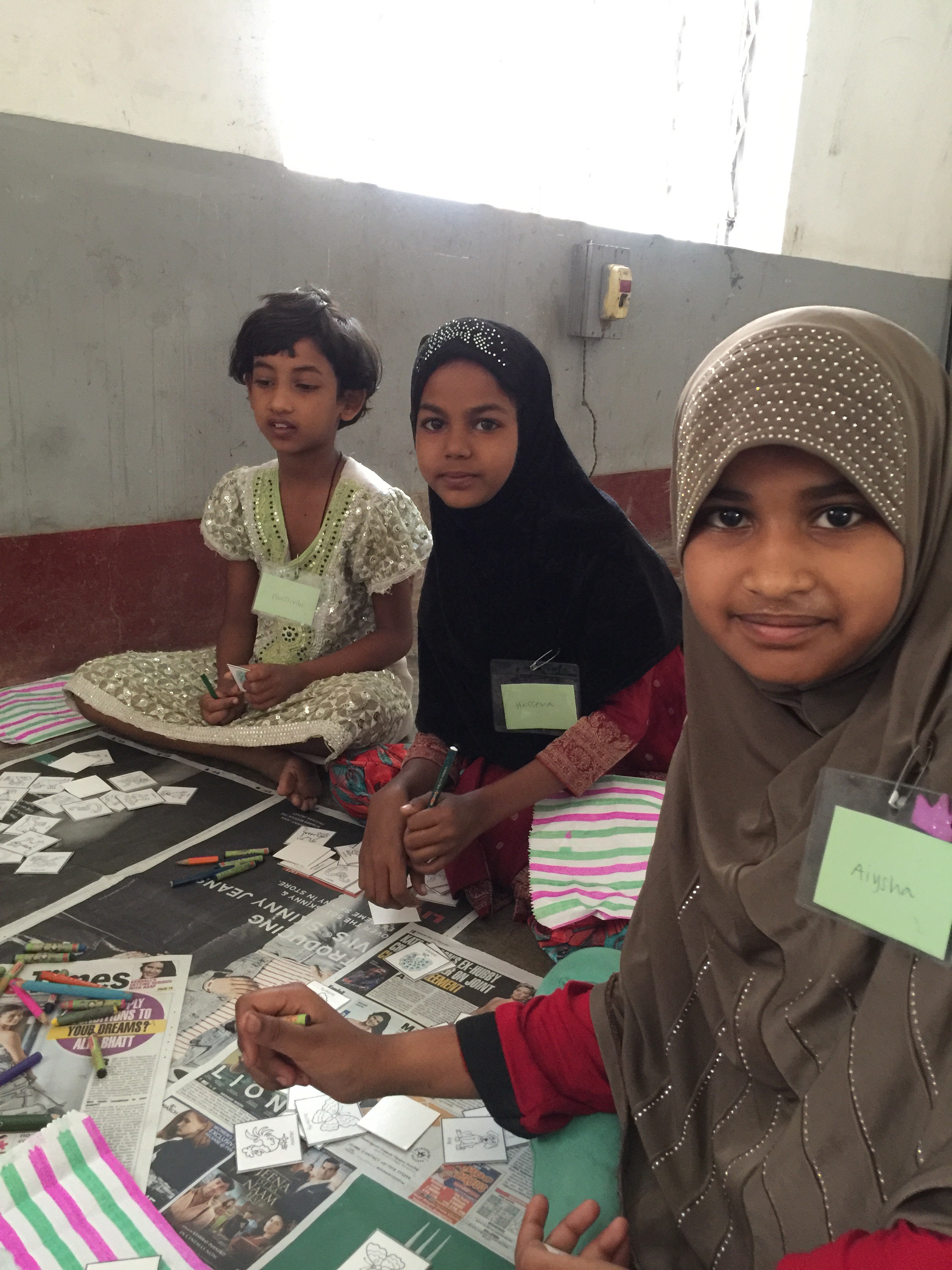
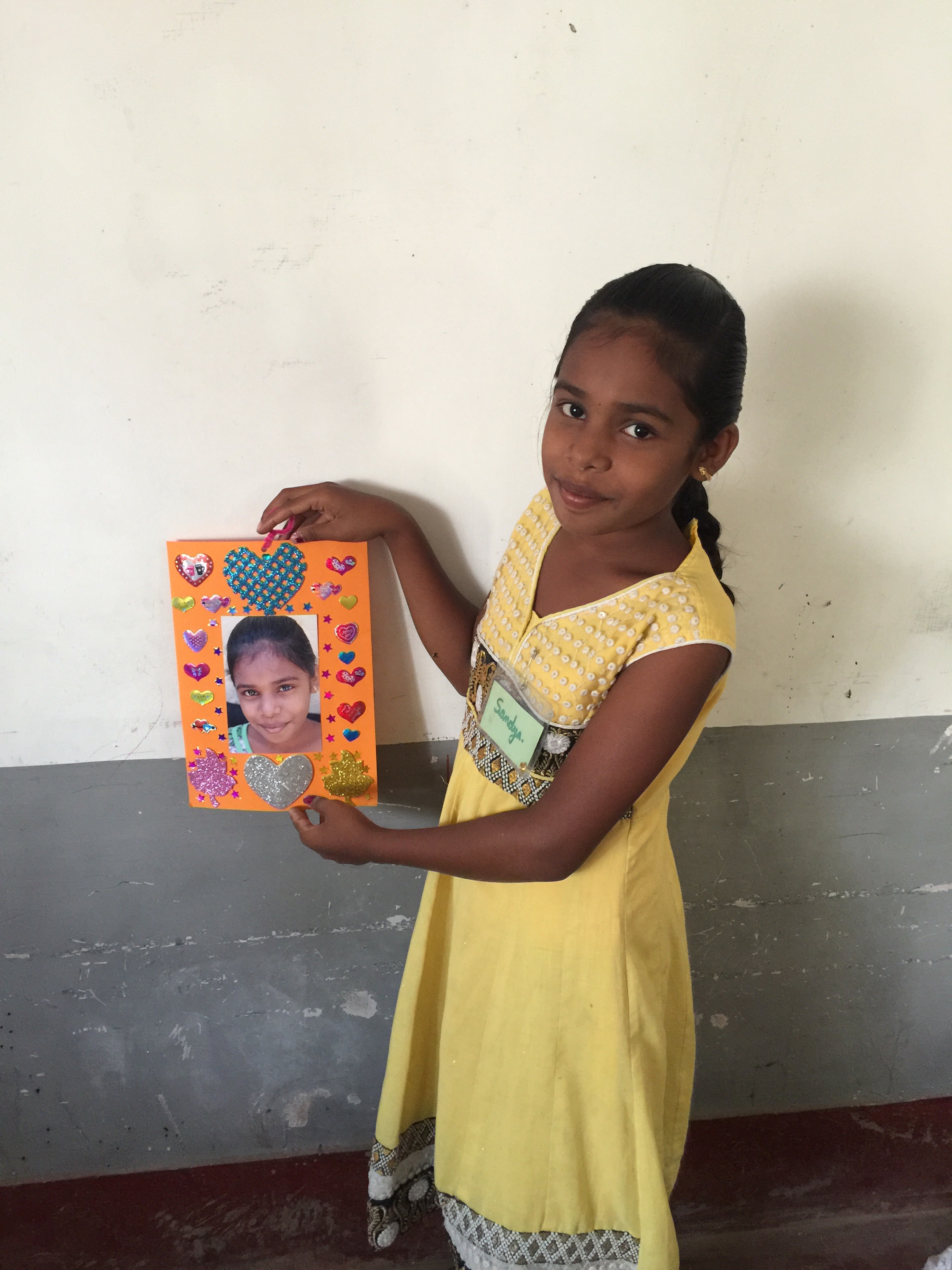
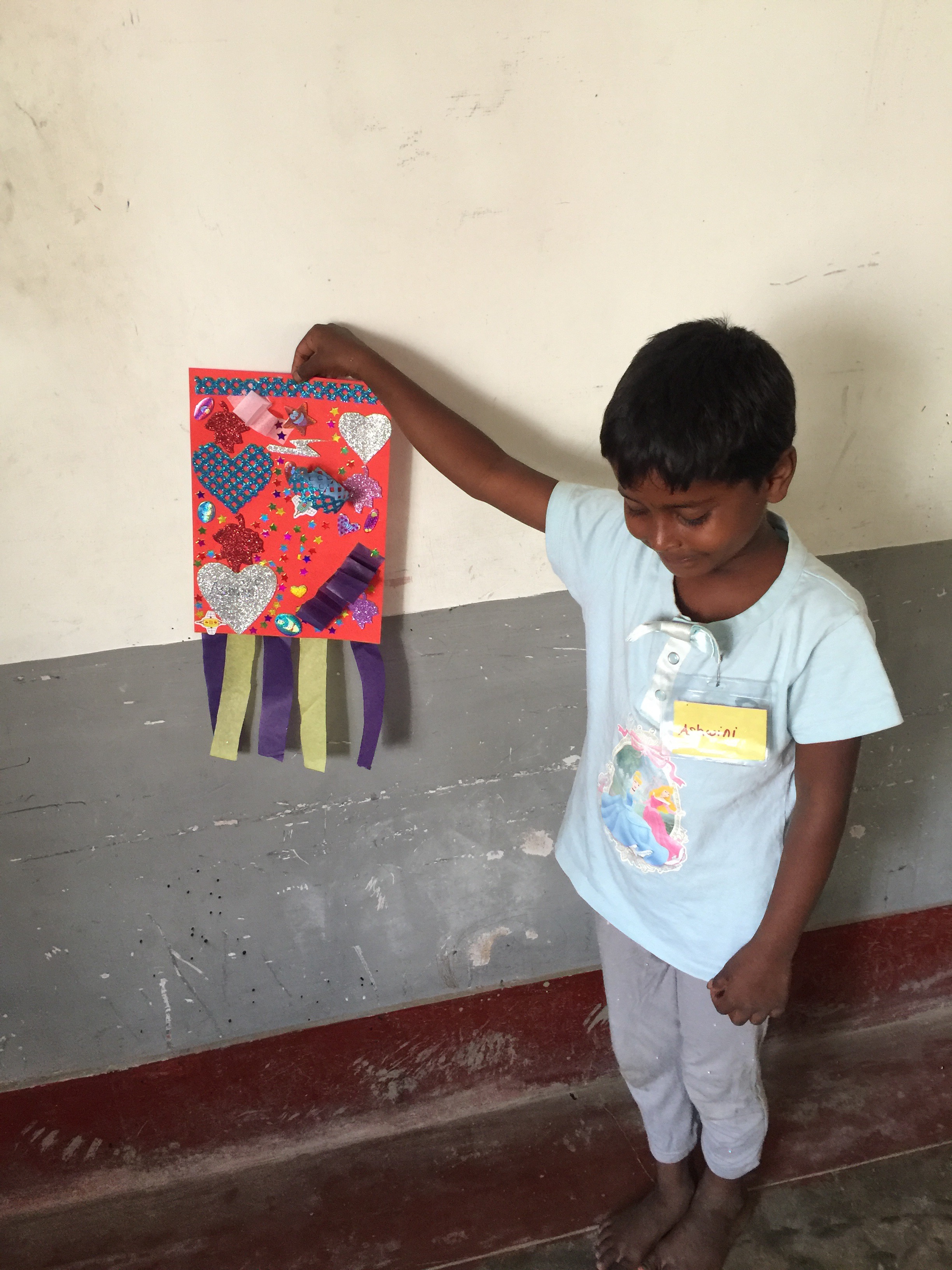
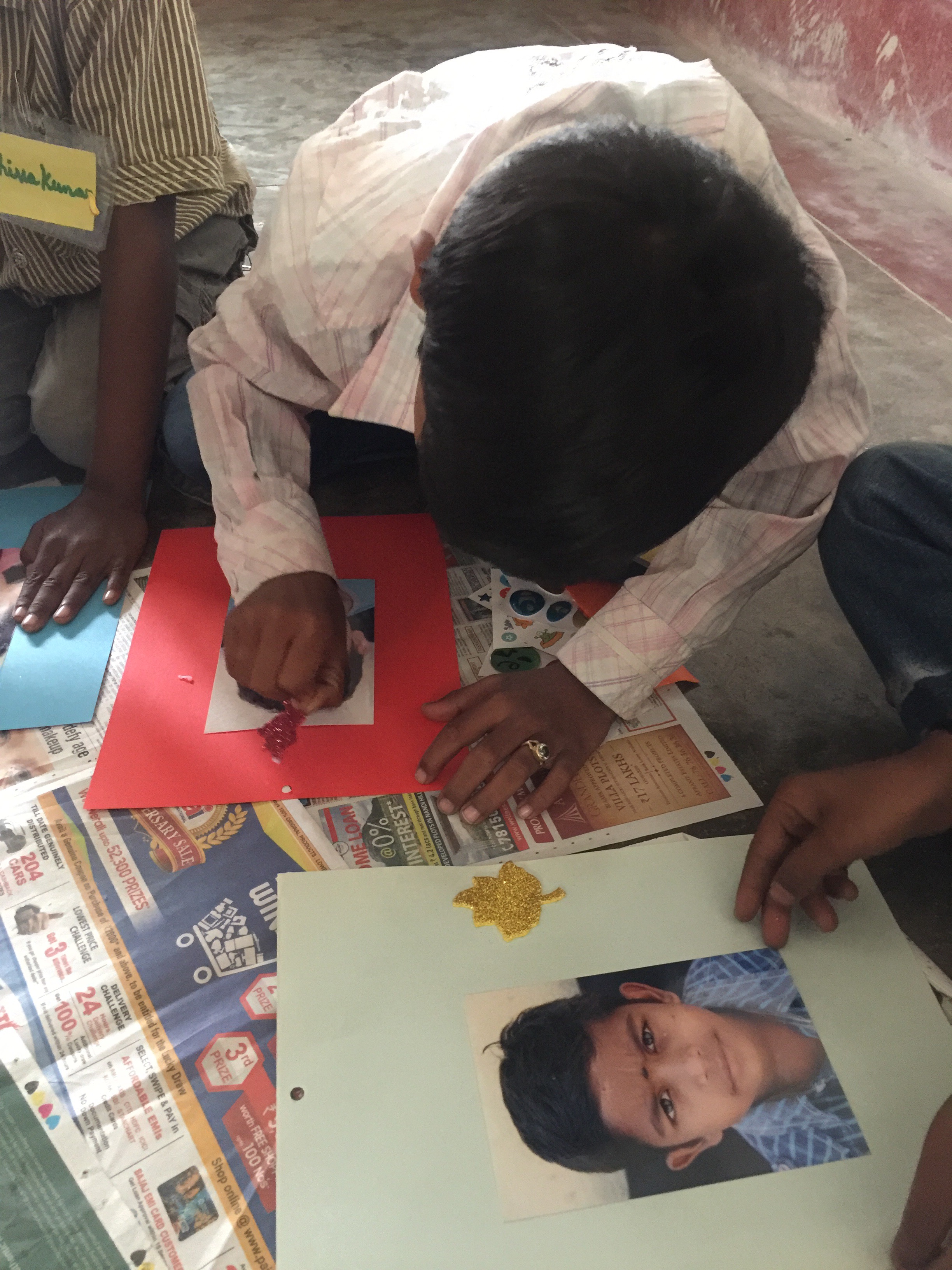
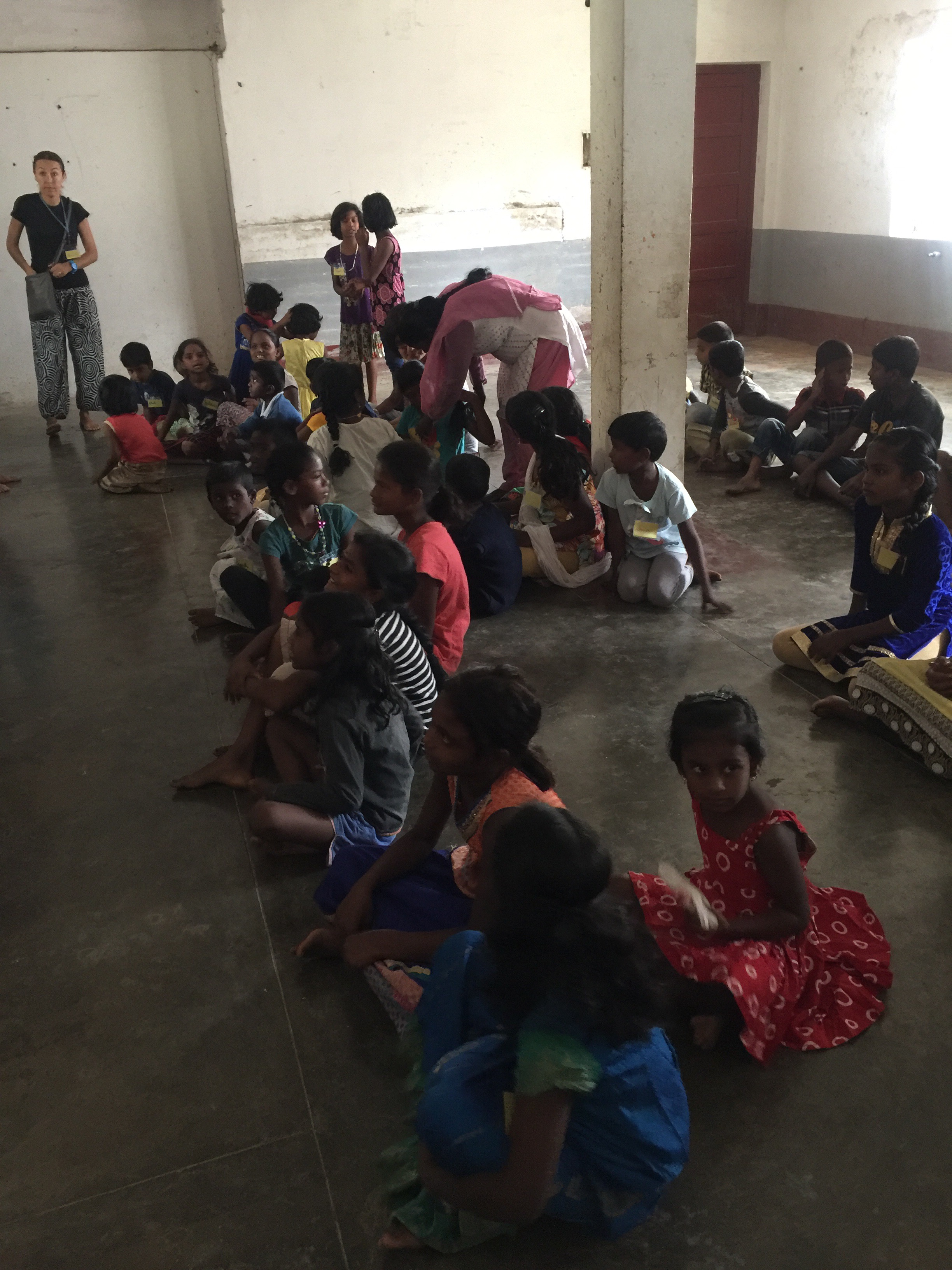
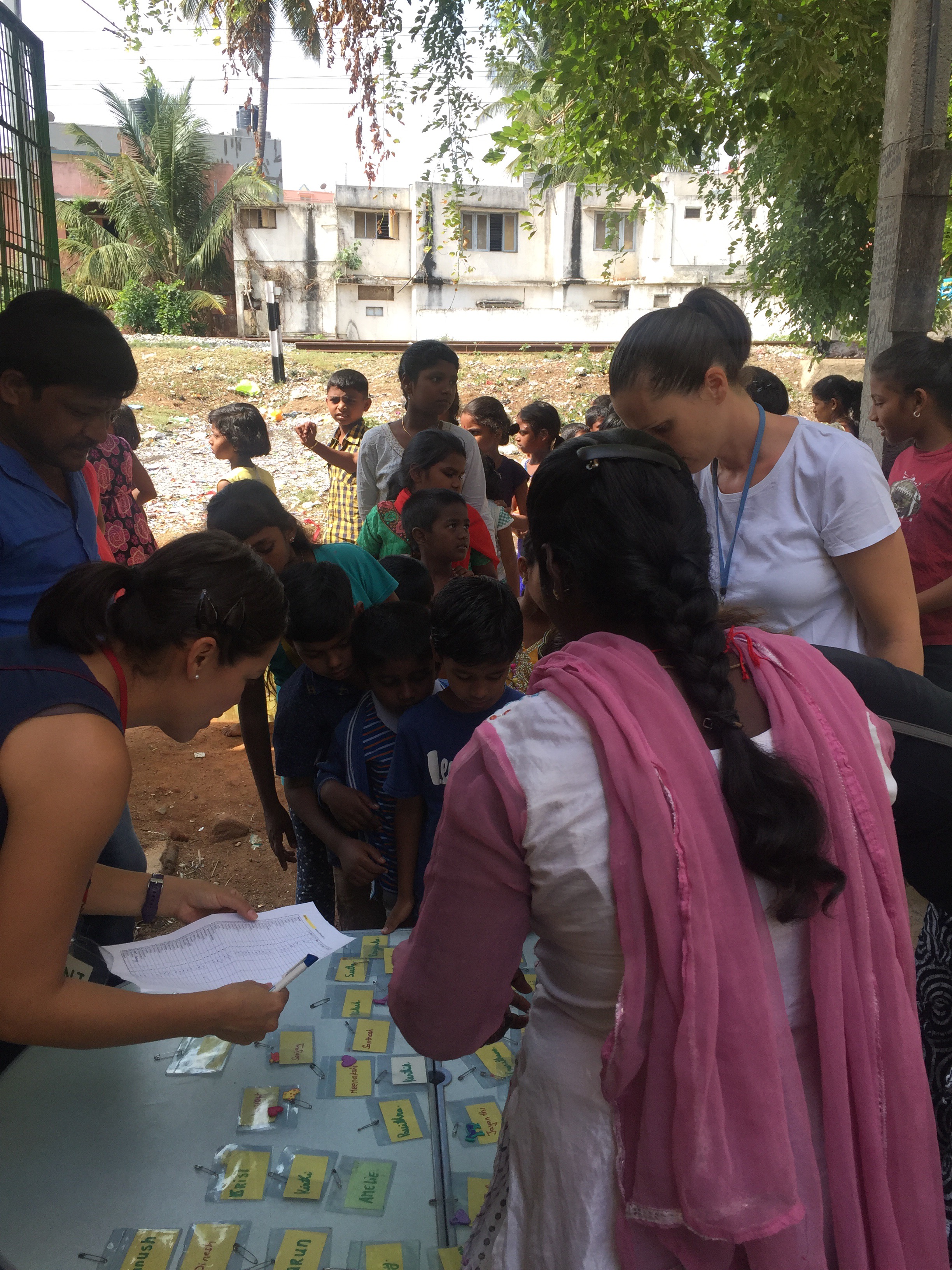
However, in the midst of all of these roadblocks, yesterday’s successful summer camp was a welcomed reprieve. It was held next to anu LIFE in an unused building (the rumor is that a baby had died there in the past and so no one wanted to rent it for fear of bad luck) in an impoverished neighborhood in East Bangalore. The camp is organized and run by expat volunteers. The whole purpose of the camp is fun. Pure and simple. No grandiose goals of pulling people out of poverty and changing lives. What a relief! Because that is definitely needed, but with a system here designed to help people cope with economic and educational disparity and not necessarily overcome it, the needs of the poor are so immense, so all consuming, and so socially acceptable in most cases, it’s so f—–g hard! And my ability to help is so utterly inadequate. However, a camp dedicated to helping kids have fun? Yeah, I got this.


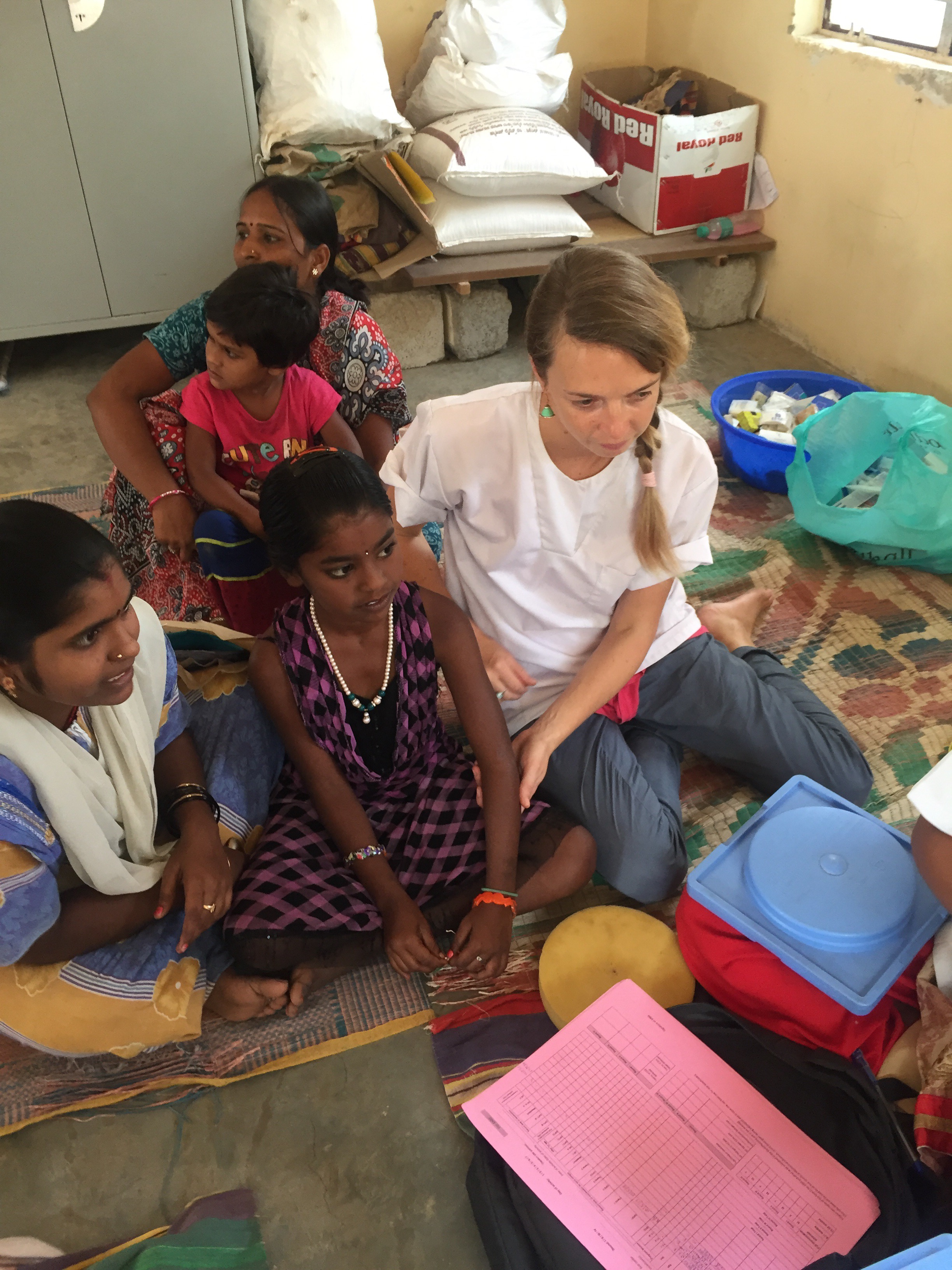
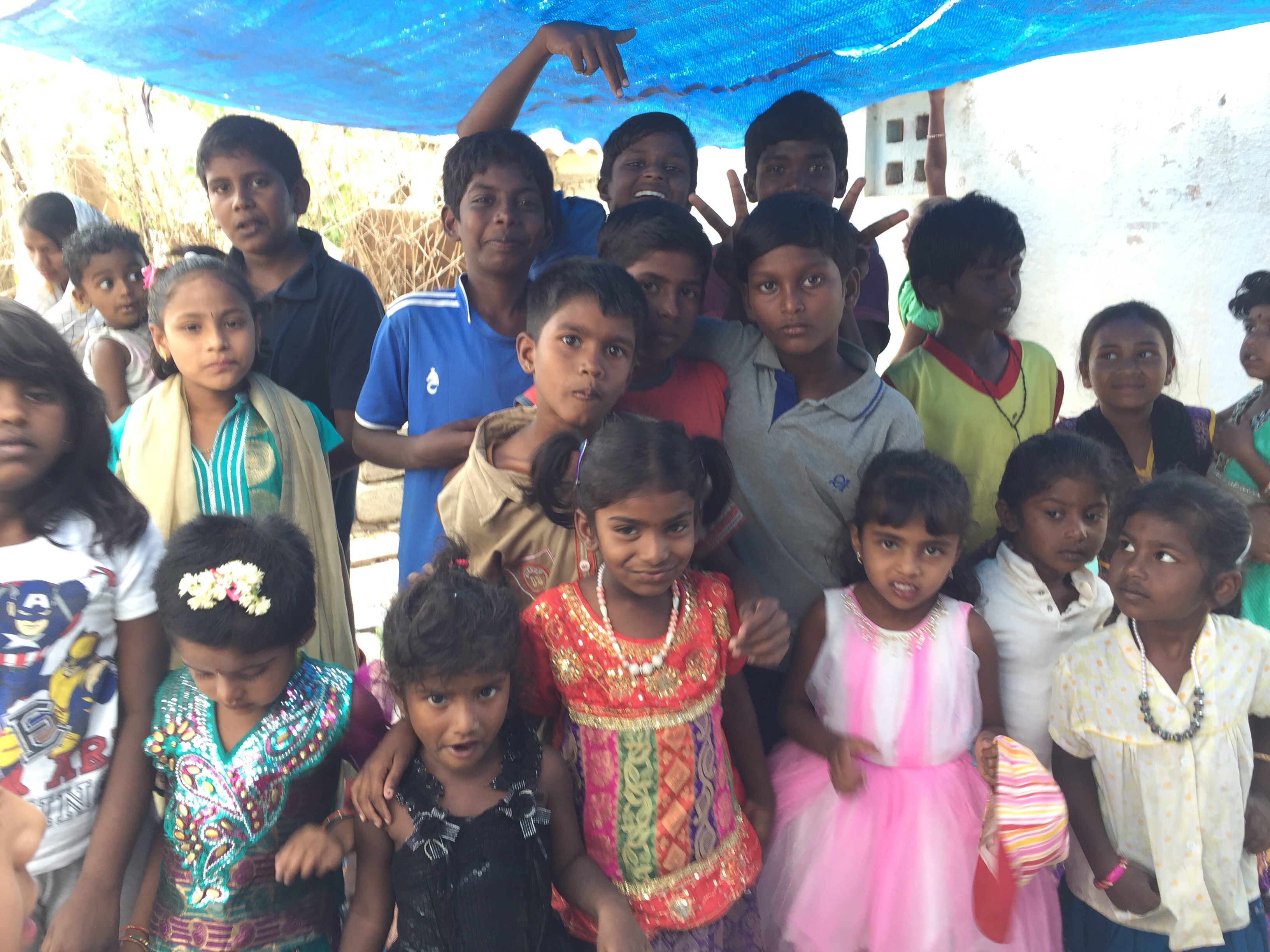


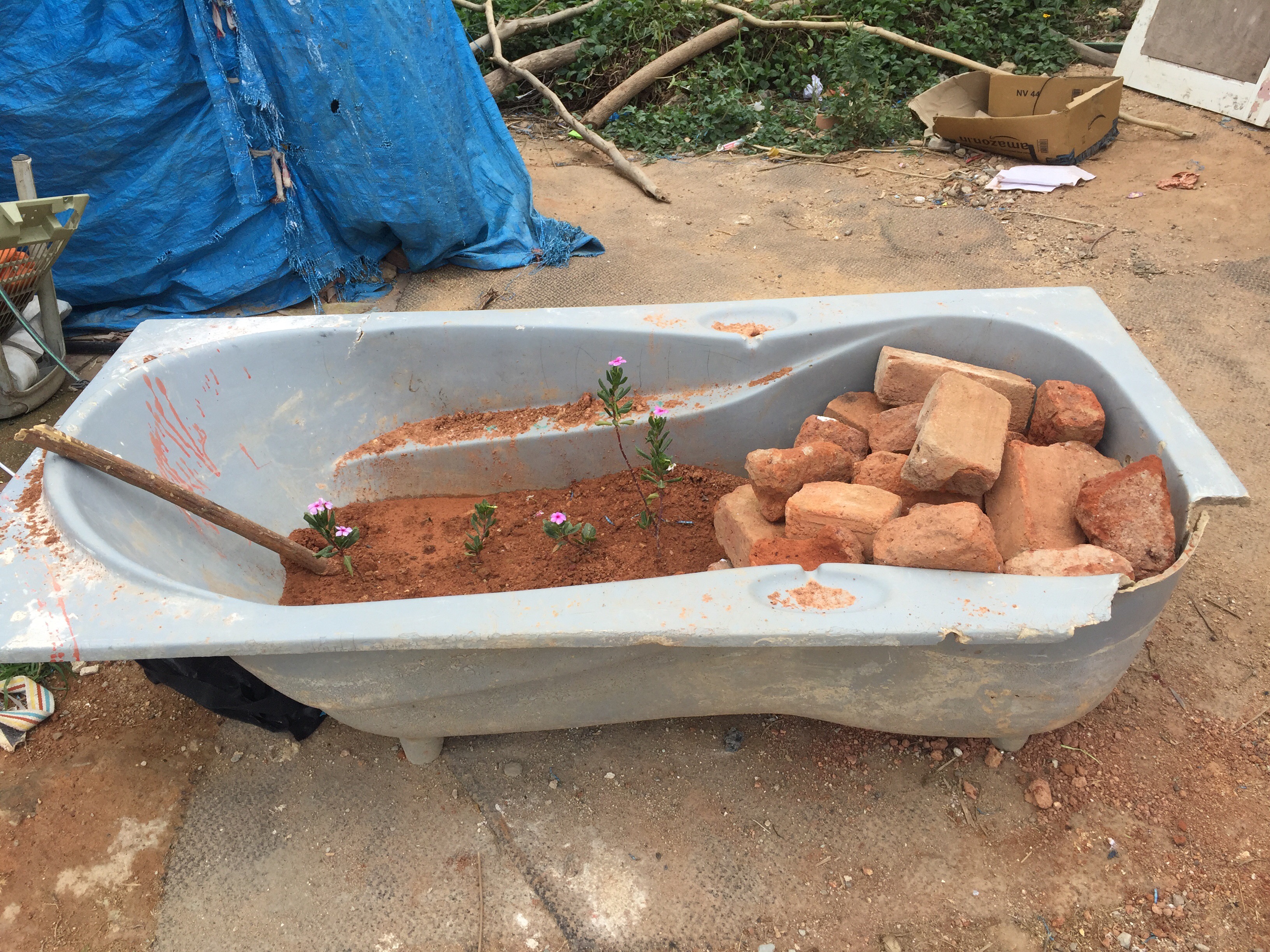
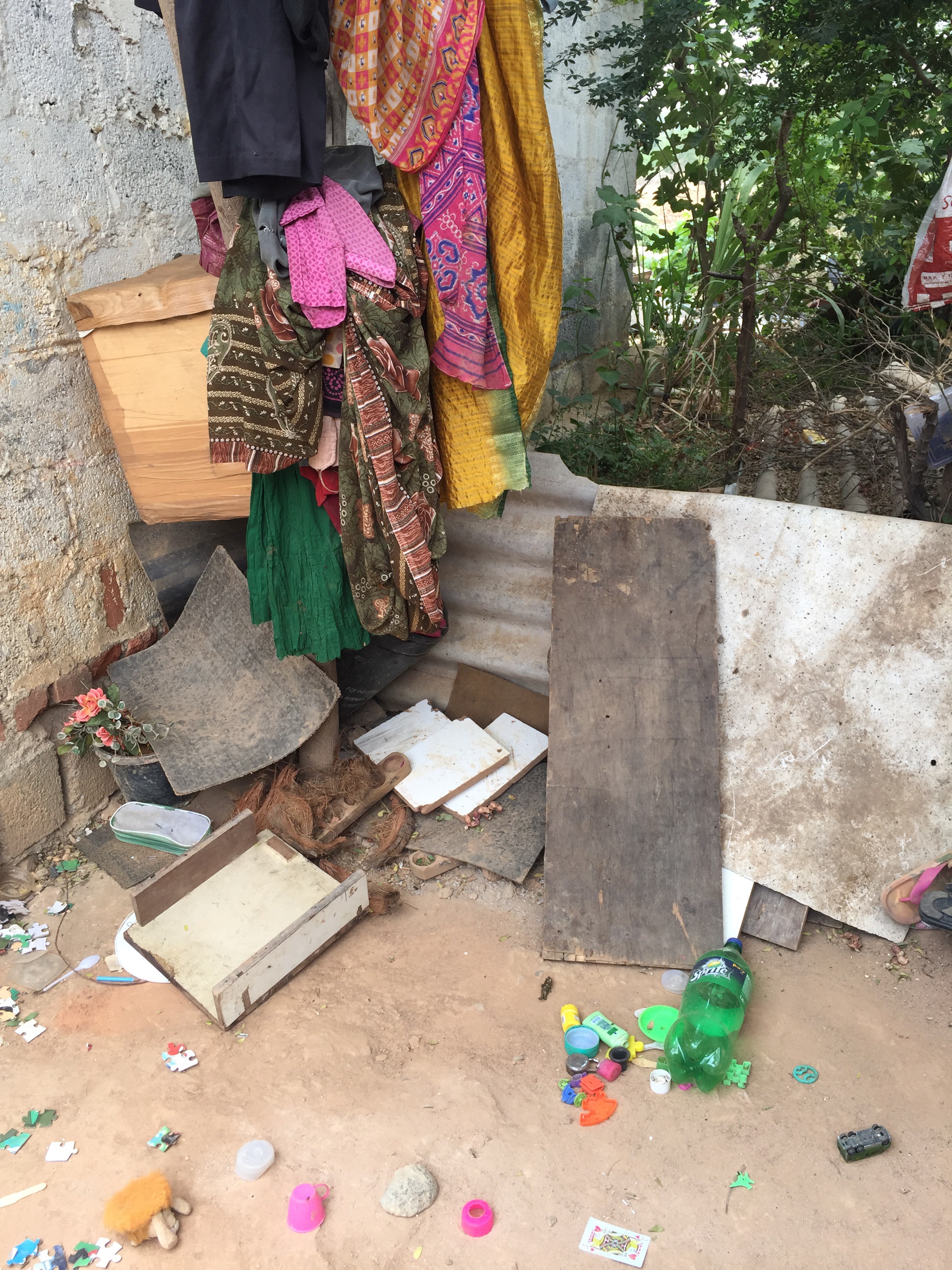

Another window opened today when we went to visit an impoverished neighborhood AKA ‘slum’ (the word used here, which my cultural political correctness cringes at) where our friend Sara, a nurse, was helping a local nurse give inoculations to children. Until recently the nurse wasn’t getting a salary, but with Sara’s interest in the clinic the nurse is employed at, seemingly out of the blue the government started paying her (white privilege is alive and well in India). The inoculations were being given at the anganwadi preschool, which was the closest thing to a community center I have seen here. It was a place for kids and adults to gather and share neighborhood news—this morning a father of 3 was killed in a train accident—and to get necessary healthcare since many weren’t able to get to the closest clinic.
We were greeted with smiles. It was strange to be welcomed warmly after the other neighborhoods we visited where the people as a whole were much more guarded, and had every right to be with the amount of exploitation that goes on in the name of ‘helping.’ Perhaps this community has really been helped by outsiders, or is just more willing to take a chance. Their plights don’t seem as dire as those of others in Bangalore. The homes have walls and some even have out-houses. There are a few wells throughout the neighborhood, although the water isn’t always clean, and from 5-6 each evening there is running water at a communal faucet.
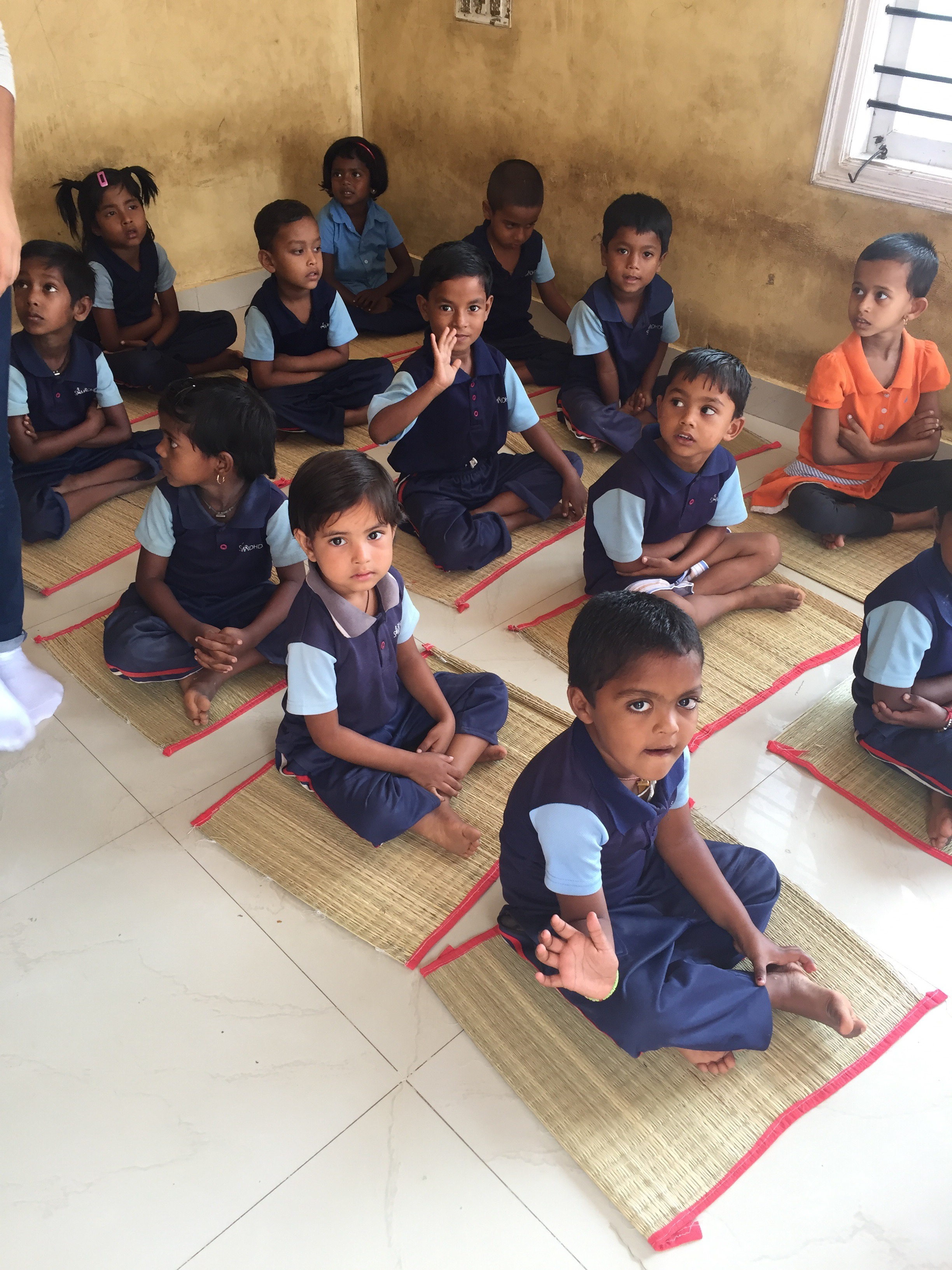
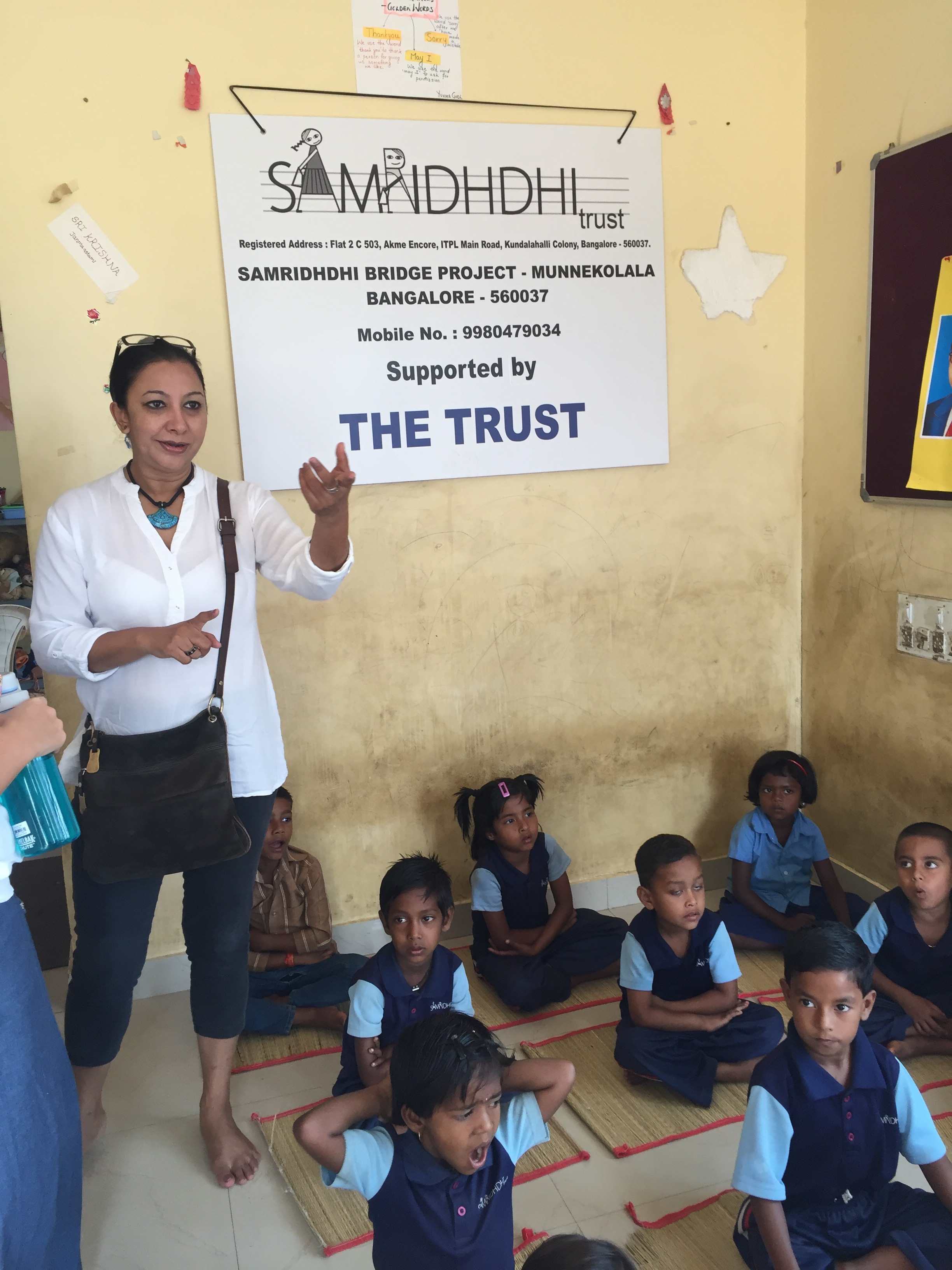
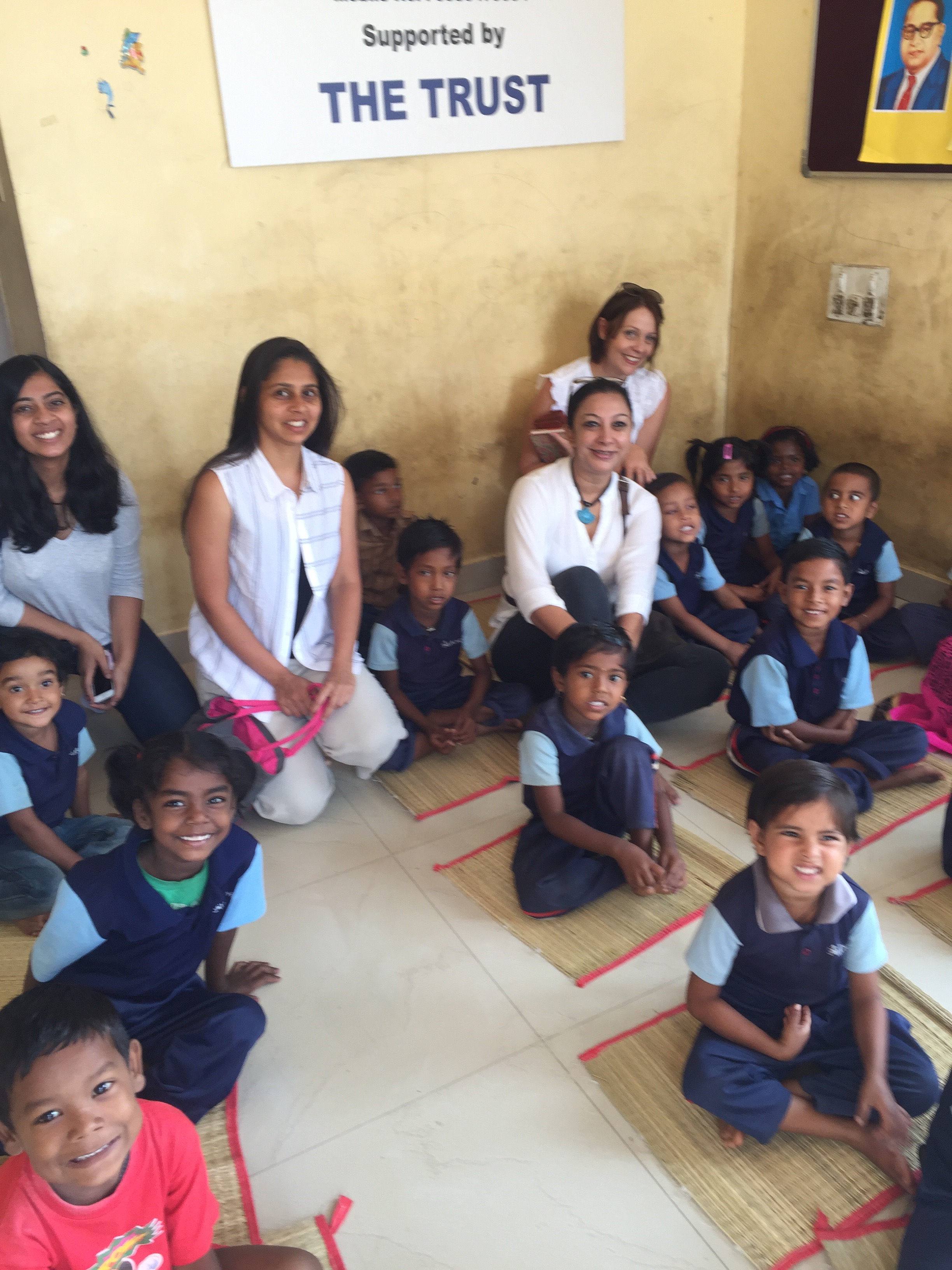
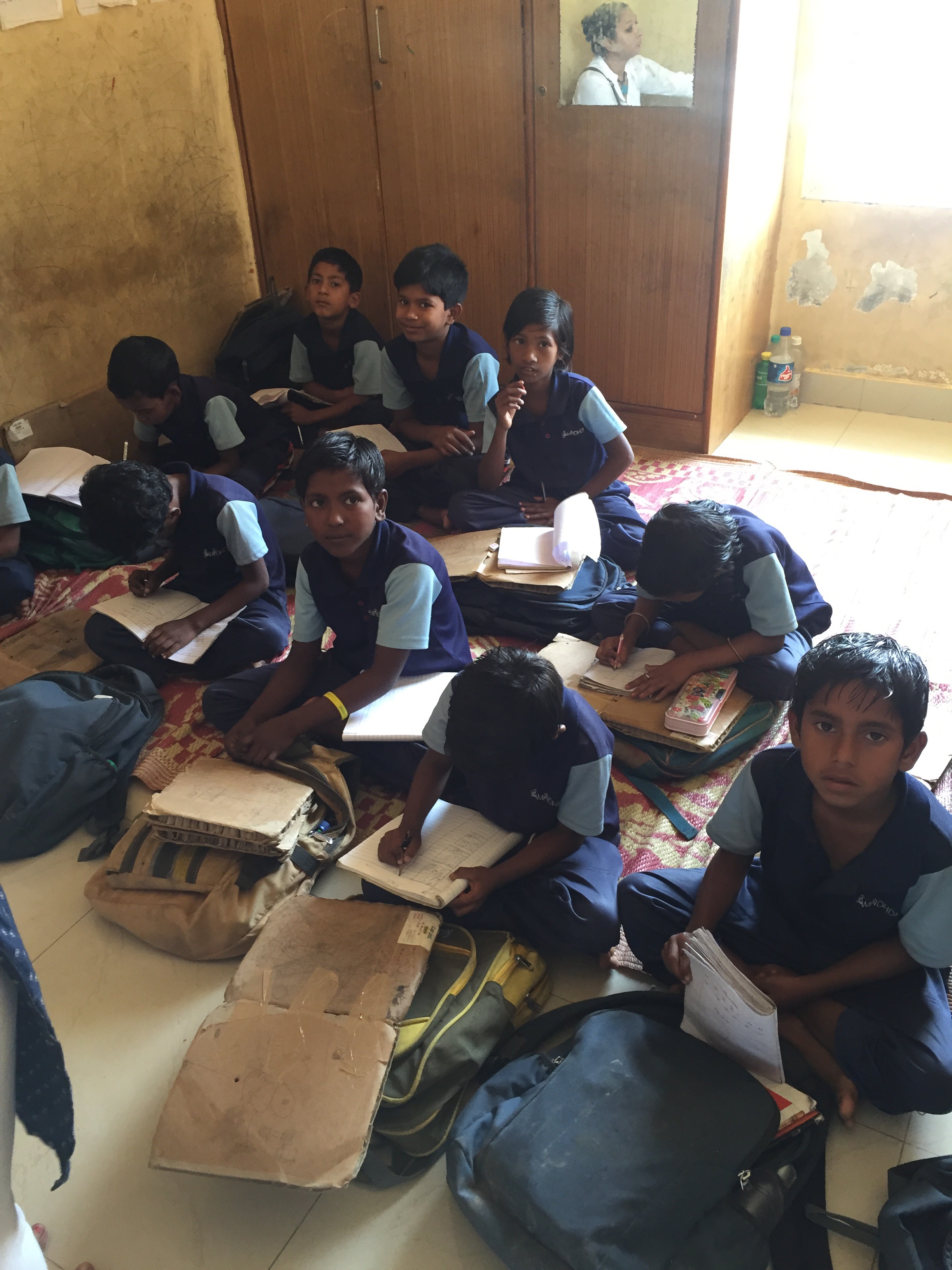
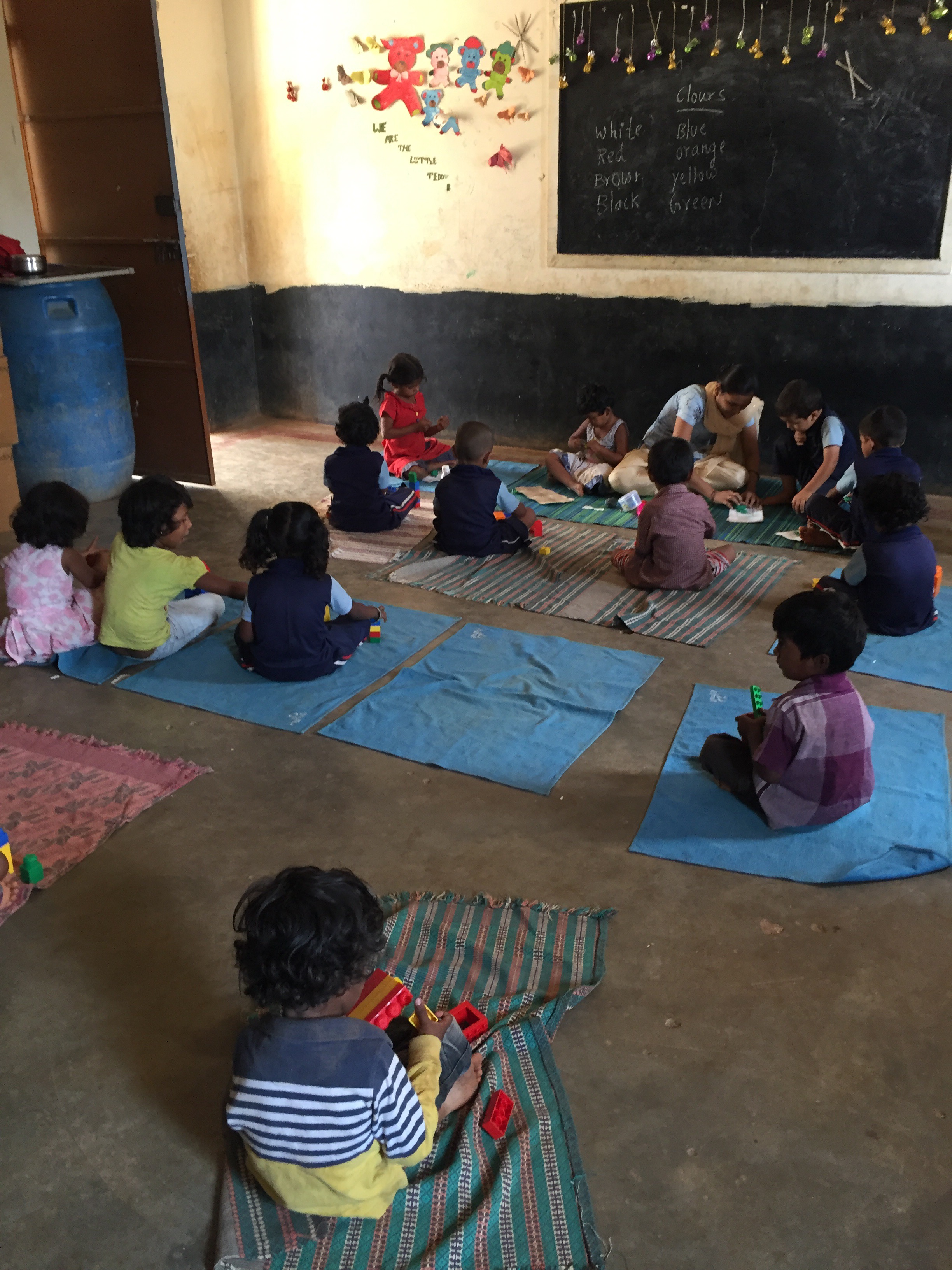
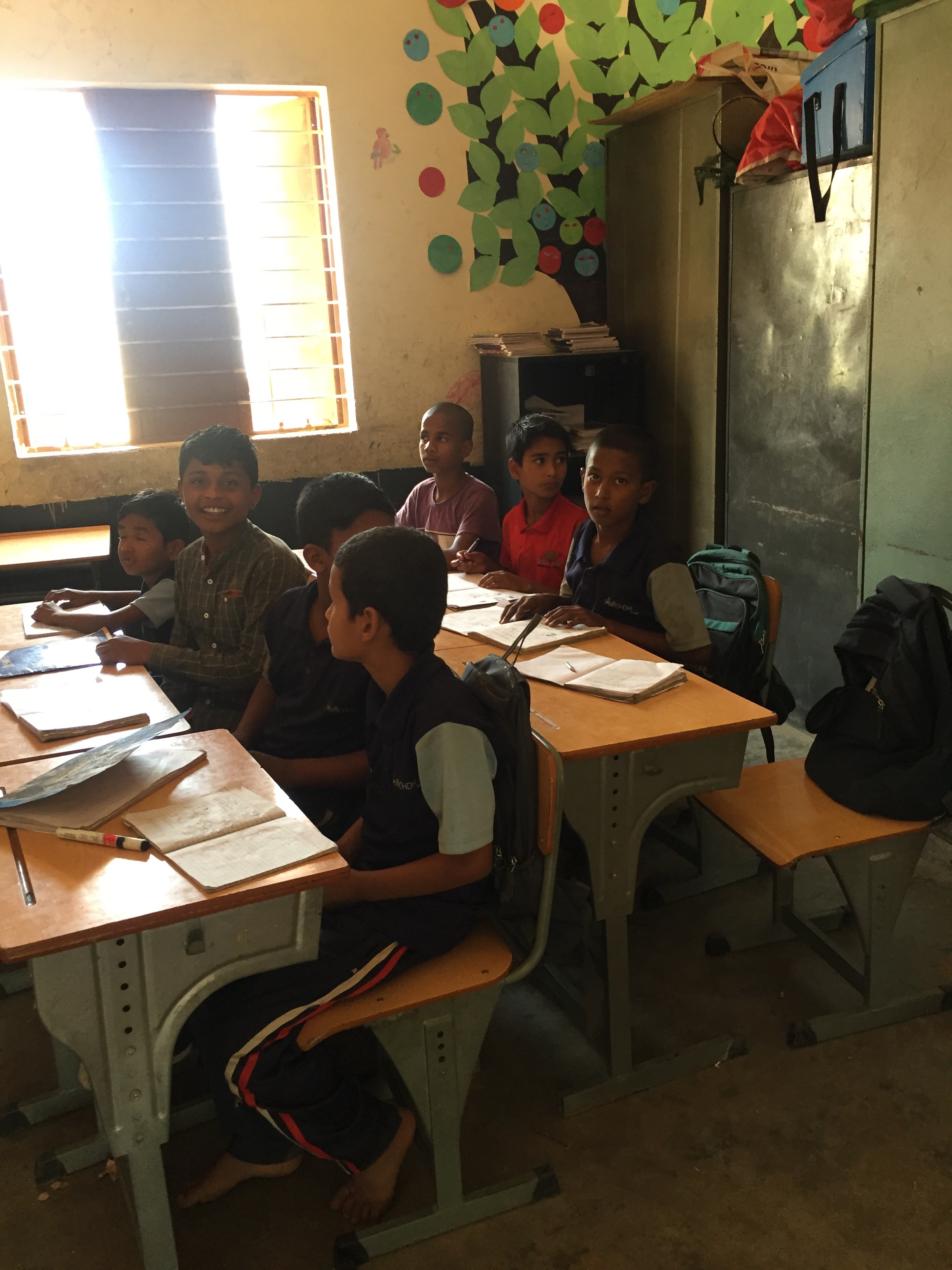
Bhagya is the teacher of the community anganwadi. She makes about $100 US a month to teach around 30 children ages 0-5 without an assistant. Assistant teachers are paid about $40 US a month, and local women can make that in a day as a housemaid, so no one sticks around long. Bhagya says she’s in it for the kids, not the money. The school is one room with a dirt floor, metal canisters are used as stools and food storage bins, but mostly the kids sit on a thin blanket on the floor which covers the rat droppings. There is a borrowed 2 pan burner and propane used to cook the government provided rice (yup, they provide rice each month but no way to cook it, although the anganwadi down the road where the tank is borrowed from has 2 propane tanks). The one room is surprisingly colorful and vibrant for all that it lacks. A visitor from Deloitte recently donated plastic fruit and veggies, beads, plastic balls, and letters, so there are a few educational materials. One wall is covered with student artwork, and educational posters, and also painted with the English alphabet and numbers, although that’s the only information not written in Kannada, the local language.
We were given a tour of the neighborhood and I was floored by the fact that it was so clean! Where was the trash? Bhagya explained that it had all been cleaned up on one side of the community because the government is building a road and had to make way for the large cement tubes used in road construction. Sure enough, the other side of the community was much filthier. Some of the tour highlights: a well attended outdoor vacation Bible school taught in front of Bhagya’s home; a woman with one dog and 7 orange kittens (so tempting) inside her home; a barn holding at least 9 goats; a woman screaming while beating her child inside her home; older women watching small babies; and almost all the women dressed in gorgeous saris and gold jewelry.
While this neighborhood may not be in as much need as others we have seen, this seems like a good place to start to implement at least some our anganwadi project initiatives. Although we have lofty sustainability goals, even if we can just get the kids some uniforms and mats to sit on, it’s a good, small start through a wide open window.

















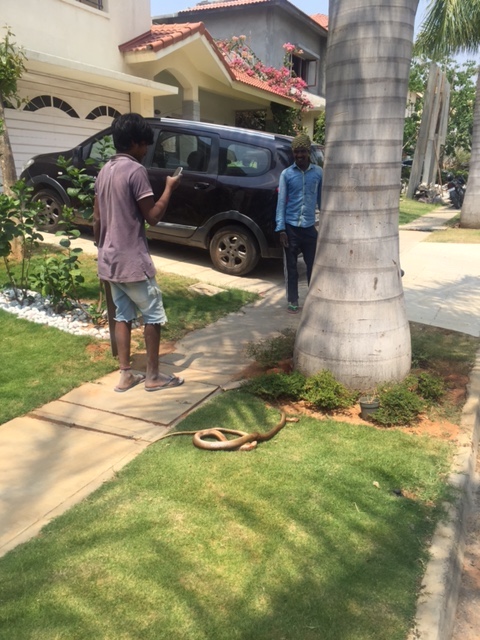 they called a snake catcher, but that it had already been 30 minutes and he had not yet shown up.



 Brooklyn Mama in India